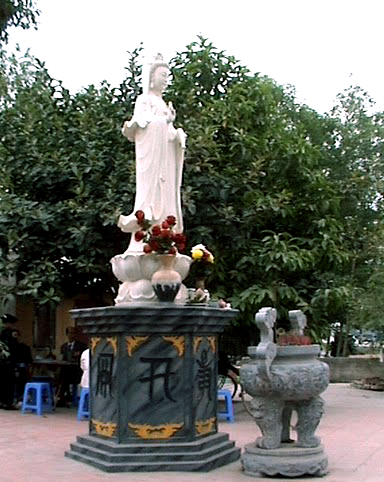
Tây Yên Tử Heritage and Scenic Site
Bắc Ninh(formerly Bắc Giang)(Khu di tích và danh thắng Tây Yên Tử)
Overview & history
The Tây Yên Tử Relic and Scenic Area comprises a system of historical and cultural relics, and scenic landscapes located on the western and northern slopes of the Yên Tử mountain range, within the territory of Bắc Ninh province. Tây Yên Tử stretches from Sơn Động commune to Bắc Giang ward. Tây Yên Tử is home to a system of pagodas, stupas, relics, and the majestic forests and mountains associated with the formation of the Trúc Lâm Yên Tử Zen sect during the Trần dynasty, such as Vĩnh Nghiêm Pagoda (Tân An ward), Am Vãi Pagoda (Nam Dương commune), Đồng Thông (Tây Yên Tử commune), and others. The Tây Yên Tử relic system, together with Đông Yên Tử and the Trần Dynasty Historical Relic Area in Đông Triều, forms the Yên Tử Relic and Scenic Complex, for which a dossier was being prepared in 2017 to propose UNESCO recognition as a World Heritage Site.
History of Formation
Yên Tử Mountain lies on the Đông Triều mountain arc, embracing the Northeast region (Vietnam); the eastern slope of Yên Tử mainly belongs to Quảng Ninh province, while the western slope of Yên Tử belongs to Bắc Giang city, Chũ town, and the districts of Lục Nam, Lục Ngạn, and Sơn Động of the former Bắc Giang province. Along the western slope of Yên Tử, many valuable historical and cultural relics and structures remain. As of 2014, Bắc Ninh had recorded over 130 large and small relics within the Tây Yên Tử area, with dossiers prepared and 26 sites recognised as provincial and national relics.
If Đông Yên Tử is where the Buddha King Trần Nhân Tông practised and where his relics are kept after his passing, then Tây Yên Tử is the path of his propagation of Buddhism. The route the king once took to reach the Yên Tử summit was from the west to the east. Not only Trần Nhân Tông, but from the 11th to the 13th centuries, many monks chose the western route to Yên Tử for practice, building pagodas, erecting stupas, and spreading the Dharma. Especially on the western slope of Yên Tử, there are a series of relics closely related to the formation and flourishing of the Trúc Lâm Yên Tử Zen sect, such as Vĩnh Nghiêm Pagoda, Am Vãi, Hồ Bấc, Bình Long, Suối Mỡ, Đồng Thông ecological area, and others.
Extent of the Relic Area
According to Decision No. 105/QĐ-UBND dated 29/11/2013 approving the master conservation plan for the Tây Yên Tử relic and scenic system, the scope of the Tây Yên Tử Relic and Scenic Area comprises the following 9 clusters: Đồng Thông Area, Khe Gỗ forest, Am Vãi Pagoda, Khuôn Thần Lake, Cấm Sơn Lake, Suối Mỡ stream, Nước Vàng stream, Vĩnh Nghiêm Pagoda, and Trúc Lâm Phượng Hoàng Zen Monastery.
Tây Yên Tử Commune
The Đồng Thông area includes the Đền (temple), Trình Pagoda; Cầu Pagoda, Kim Quy Pagoda; Đồng Pagoda; Bụt Pass, Phật Sơn mountain. This is called the Tây Yên Tử Spiritual Culture Area.
An Lạc Commune
Khe Rỗ forest in An Lạc commune, part of the Tây Yên Tử Nature Reserve, consists of primary forest with many rare species of flora and fauna.
Nam Dương Commune
Am Vãi Pagoda in Nam Dương commune is a Buddhist pagoda; Trúc Lâm Zen sect's Three Patriarchs; the 'Fairy Footprint'.
Kiên Lao Commune
Khuôn Thần Lake in Kiên Lao commune features beautiful natural scenery, pine forests, and lychee orchards.
Sơn Hải, Hộ Đáp, Tân Sơn, and Cấm Sơn Communes
Cấm Sơn Lake in the four communes of Sơn Hải, Hộ Đáp, Tân Sơn, and Cấm Sơn. This area boasts beautiful natural scenery, with a lake surface area of 2,500 ha.
Nghĩa Phương Commune
The Suối Mỡ - Hồ Bấc area in Nghĩa Phương commune has 12 relic sites, worships the Mother Goddess of the Highlands, and features streams with beautiful natural landscapes.
Lục Sơn Commune
Nước Vàng stream in Lục Sơn commune, with beautiful nature; the stream water is yellow in colour.
Tân An Ward
Vĩnh Nghiêm Pagoda, where the three Patriarchs of the Trúc Lâm Zen sect are worshipped, has beautiful architecture.
Yên Dũng Ward
Trúc Lâm Phượng Hoàng Zen Monastery, Đền Vua summit—the highest peak of the Nham Biền range—has the Điền Trang Thái Ấp of Trần Thủ Độ.
Tây Yên Tử Nature Reserve
The Tây Yên Tử Nature Reserve is located in Tây Yên Tử township and the communes of Thanh Luận, An Lạc (Sơn Động district), and Lục Sơn commune (Lục Nam district), Bắc Giang province. The reserve borders Lạng Sơn and Quảng Ninh provinces. The Tây Yên Tử Nature Reserve currently has 13,022.7 ha of forest and special-use forest land, including: strictly protected subzone (6,022.5 ha), ecological restoration subzone and administrative-service subzone (7,000.2 ha).
At Tây Yên Tử, five main types of vegetation have been identified: at altitudes below 100 m: grassland and shrubs; at 100–200 m: bamboo grassland interspersed with small trees and bamboo; at 200–900 m: closed evergreen forest, broad-leaved trees often mixed with conifers, humid tropical rainforest; above 900 m: broad-leaved tree forest.
According to research by the Institute of Ecology and Biological Resources (2003, 2009), initial statistics recorded the taxonomic diversity of mammals, birds, reptiles, and amphibians as follows: 27 orders, 91 families, 285 species.
Tây Yên Tử Spiritual Culture Area
The Tây Yên Tử Spiritual Culture Area is located along the western route up Yên Tử mountain to Đồng Pagoda (at the Yên Tử summit, Quảng Ninh province), with a total area of 13.8 ha in the Đồng Thông area, Tây Yên Tử township, Sơn Động district (Bắc Giang). The Tây Yên Tử Spiritual Culture Area is divided into four independent pagoda clusters: Trình Pagoda, Hạ Pagoda (Phật Quang Pagoda), Trung Pagoda, Thượng Pagoda (Kim Quy Pagoda), with pagoda sites ranging from 145 m to nearly 1,000 m in elevation, connected to Đồng Pagoda, the statue of Buddha King Trần Nhân Tông on the Yên Tử summit, and a synchronised system of technical infrastructure, service works, transport, cable car, and more.
The construction of the Tây Yên Tử Spiritual Culture Area is divided into three phases, starting from 2014 and expected to be completed by 2025. Phase 1 (2014–2018): construction of Thượng and Hạ Pagodas, upgrading provincial road 293 to Hạ Pagoda; Phase 2 (2018–2020): construction of Trình and Trung Pagodas; Phase 3 (2021–2025): completion of all investment items for works and technical infrastructure.
Vĩnh Nghiêm Pagoda
Vĩnh Nghiêm Pagoda is also known as Đức La Pagoda. Vĩnh Nghiêm Pagoda is considered the first Buddhist university in Vietnam. In the history of Vietnamese Buddhism, Đức La Pagoda was an important centre and ancestral site, where the three "Trúc Lâm Patriarchs" once resided and established a school for preaching the Dharma. The pagoda is situated on a low hill, with the Cô Tiên mountain range behind, one side adjacent to the Lục riverbank, and farther across lies the Phượng Nhỡn junction, where the Lục Nam and Thương rivers meet. The main façade of Đức La Pagoda faces a wide, open area stretching to the edge of low-lying rice fields and green bamboo villages. With architecture dating from before the Trần dynasty, the pagoda has a rich and sacred system of Buddha statues, especially the collection of woodblocks of Buddhist scriptures, which has been recognised by UNESCO as a World Documentary Heritage.
Photos
📷 Contribute photosVisiting tips
- Dress modestly; remove hats and keep quiet inside the main hall.
- Incense, flowers and offerings are usually sold right outside the gate; light an odd number of sticks (1 or 3).
- Most pagodas open from early morning to evening and are free to enter (some major sites charge a small scenic fee).
- Full-moon days, the 1st of the lunar month and Tet are very crowded; visit on weekday mornings for a quiet experience.
- Ask permission before photographing inside shrines; do not touch statues or altar objects.
Read more & references
Useful links to learn more before your visit:
References
- Vietnamese Wikipedia
- http://vietnamnet.vn/vn/doi-song/176849/tay-yen-tu--khu-van-hoa-tam-linh-voi-108-ngon-thap.html
- http://www.tienphong.vn/van-nghe/huyen-tich-tay-yen-tu-706615.tpo
- http://www.vietnamplus.vn/xay-dung-khu-van-hoa-tam-linh-tay-yen-tu-o-bac-giang/259036.vnp
- http://baophapluat.vn/xa-hoi/khoi-cong-xay-dung-khu-van-hoa-tam-linh-tay-yen-tu-185180.html
- http://www.eaza.net/campaigns/Documents/Brochure%20Tay%20Yen%20Tu%20Nature%20Reserve%202010.pdf
- http://thuvienphapluat.vn/archive/Quyet-dinh-1281-QD-UBN-nam-2013-quy-hoach-bao-ton-phat-trien-rung-dac-dung-Bac-Giang-2020-vb204871.aspx
- https://web.archive.org/web/20131015204443/http://www.eaza.net/campaigns/Documents/Brochure%20Tay%20Yen%20Tu%20Nature%20Reserve%202010.pdf
Other pagodas in Bắc Ninh