Hà Giang Pagoda
Quảng Ninh(Chùa Hà Giang)
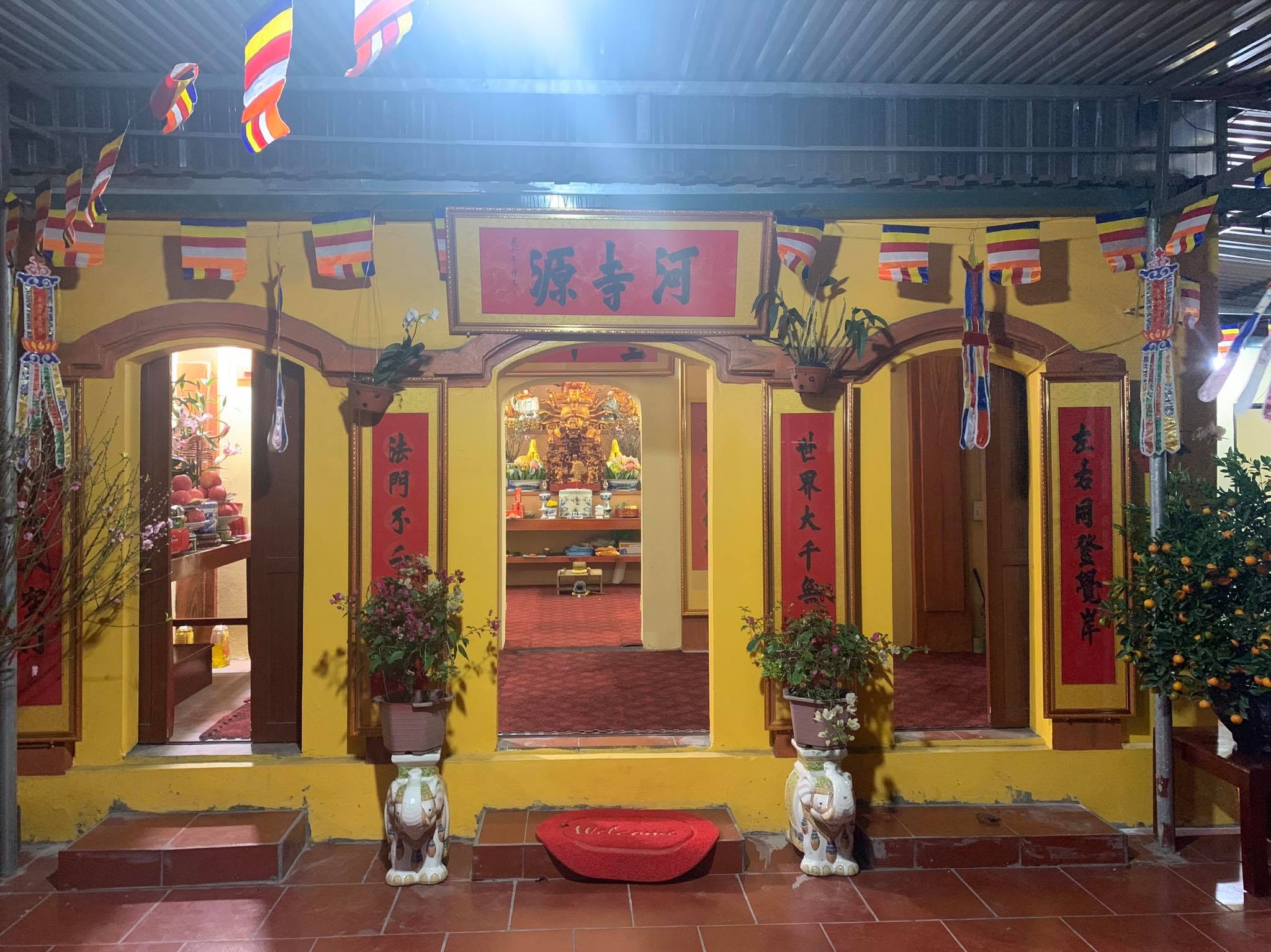
Overview & history
Hà Giang Pagoda (also known as Hà Lôi Pagoda; temple name in Chinese characters: 河源寺; Sino-Vietnamese pronunciation: Hà Nguyên Tự) is an ancient pagoda located in Đông Triều ward, Quảng Ninh province (formerly: Đức Chính ward, Đông Triều city, Quảng Ninh province).
In addition to worshipping the Buddha, the pagoda also venerates four village tutelary deities (thành hoàng làng) of Hà Lôi village: Trần Triều Bảo Huệ Quốc Mẫu, Trần Triều Bảo Từ Hoàng Thái Hậu, Văn Huệ Thái Trưởng Công Chúa, and Thượng Trân Công Chúa.
The pagoda has been included in the inventory and classification of heritage sites by the People's Committee of Quảng Ninh province but has not yet been officially ranked, according to the following decisions: Decision No. 2459/QĐ-UBND, dated 14/8/2009 of the Quảng Ninh Provincial People's Committee, Decision No. 789/QĐ-UBND dated 26/3/2015 of the Provincial People's Committee, and Decision No. 3929/QĐ-UBND approving the List of Historical - Cultural Sites and Scenic Spots in Quảng Ninh province.
Location
Hà Giang Pagoda is situated on a small hill by the old Cầm River, formerly in Hà Lôi Commune, Mễ Sơn district, Đông Triều district, Hải Dương province, now part of Hà Giang Pagoda Area, Đức Chính ward, Đông Triều city, Quảng Ninh province, about 3.5 km from Đông Triều ward and 67 km from Hạ Long city. The pagoda has been included in the inventory and classification of heritage sites by the People's Committee of Quảng Ninh province but has not yet been officially ranked, according to Decision No. 2459/QĐ-UBND, dated 14/8/2009 of the Quảng Ninh Provincial People's Committee, Decision No. 789/QĐ-UBND dated 26/3/2015 of the Provincial People's Committee, and Decision No. 3929/QĐ-UBND. The pagoda is located at the head of Hà Lôi wharf on the Cầm River, in the area of the three Hà Lôi Upper and Lower Quarters. In front of the pagoda is a large river, while the other three sides are surrounded by hills and mountains. Above, it is close to Quỳnh Lâm Pagoda.
History
According to documents such as the "Hương ước làng Hà Lôi" (Village Convention of Hà Lôi) from 1936, section "Tế tự" (Rituals), Hà Giang Pagoda was formerly the village pagoda of Hà Lôi village, Mễ Sơn district, Đông Triều district, Hải Dương province, now the Lower 1, Lower 2, Upper 1, Upper 2 Quarters of Tràng An ward, Đông Triều city, Quảng Ninh province. Hà Giang Pagoda was once very large; according to the village convention of Hà Lôi village, Mễ Sơn district, the pagoda had 3 mẫu, 4 sào, and 10 thước of Buddhist temple fields. Based on some artefacts such as tiles, stone turtles, stone dog statues, stone steles, and column bases still preserved at the pagoda, it was built during the Lê Trung Hưng period. Later, after being damaged by war, the pagoda was restored during the Nguyễn dynasty. In 1943, the pagoda underwent further renovation. By 1960, the pagoda was completely destroyed, leaving only the stone wall at the rear sanctuary. In 1991, the family of Mr. Phạm Văn Vân from Hà Lôi Hạ 1 village undertook restoration and renovation of the pagoda.
Currently, although this is the village pagoda for the Lower 1, Lower 2, Upper 1, and Upper 2 Quarters of Tràng An ward (now part of Bình Khê ward, Quảng Ninh province), Hà Giang Pagoda is actually located in Yên Lâm 2 Quarter, Đức Chính ward (now part of Đông Triều ward) and has been significantly encroached upon due to brick production and sand mining activities.
Worship of the Village Tutelary Deities
According to the genealogies and ordination documents of Hà Lôi village, Mễ Sơn district, Đông Triều district, Hải Dương province, preserved at the Vietnam Academy of Social Sciences and through local oral tradition, in addition to worshipping the Buddha, the pagoda also venerates four village tutelary deities of Hà Lôi village. There are still documents regarding four imperial decrees from the 9th year of Khải Định of the Nguyễn dynasty. These include:
陳朝寶惠國母尊神 (Trần Triều Bảo Huệ Quốc Mẫu Tôn Thần), conferred the beautiful title: 莊微翊保中興上等神 (Trang Huy Dực Bảo Trung Hưng Thượng Đẳng Thần)
文惠太長公主尊神 (Văn Huệ Thái Trưởng Công Chúa Tôn Thần), conferred the beautiful title: 莊微翊保中興上等神 (Trang Huy Dực Bảo Trung Hưng Thượng Đẳng Thần)
上珍公主尊神 (Thượng Trân Công Chúa Tôn Thần), conferred the beautiful title: 莊微翊保中興上等神 (Trang Huy Dực Bảo Trung Hưng Thượng Đẳng Thần)
陳朝寶慈皇太后 (Trần Triều Bảo Từ Hoàng Thái Hậu).
These four deities are worshipped at the pagoda, with offerings made on the 1st and 15th days of the lunar month. The offerings consist of fruit and vegetarian dishes.
Worship
- Currently, in the main hall of the pagoda, the central altar venerates the Buddha with a large horizontal inscribed board: "Chư Phật Hải Hội" (Assembly of Buddhas). At the highest level are three statues of the Amitabha Trinity: Amitabha Buddha, Avalokiteśvara Bodhisattva, and Mahāsthāmaprāpta Bodhisattva. The second tier features three statues of the Avataṃsaka Trinity: Śākyamuni Buddha, Mañjuśrī Bodhisattva, and Samantabhadra Bodhisattva. The third tier has a statue of Avalokiteśvara Cundi and the Dragon Gate, along with seven Medicine Buddhas.
- On the left is the altar of Đức Chúa Ông Cấp Cô Độc (the Venerable Anāthapiṇḍika) and his two attendants, Gia Lam and Chân Tể. Above is a large inscribed board: “Thần Uy Mặc Trắc” (Divine Power, Profound and Unfathomable).
- On the right is the altar of Đức Thánh Hiền A Nan Đà Tôn Giả (the Venerable Ānanda) and his two attendants, Dharma Protector Vi Đà and Tiêu Diện Đại Sĩ (the Great Masked Bodhisattva).
- In the Mother Goddess Hall of Hà Giang Pagoda, the central altar venerates the Tam Tòa Thánh Mẫu (Three Palaces of the Mother Goddesses), Quan Lớn Đệ Tam, Cô Bơ, and Cô Chín. On the left is the altar of Đức Thánh Trần (Saint Trần) and his two attendants, Yết Kiêu and Dã Tượng. On the right is the Sơn Trang altar, worshipping Chúa Sơn Trang, Chầu Bà Đệ Tam, and two Cô Bé Thượng Ngàn. The lower altar venerates the Five Tigers, with Thanh Xà (Green Snake) and Bạch Xà (White Snake) on either side.
- In the miếu (shrine) dedicated to the four village tutelary deities of Hà Lôi at the pagoda, the following are worshipped: 陳朝寶惠國母尊神 (Trần Triều Bảo Huệ Quốc Mẫu Tôn Thần), 文惠太長公主尊神 (Văn Huệ Thái Trưởng Công Chúa Tôn Thần), 上珍公主尊神 (Thượng Trân Công Chúa Tôn Thần), 陳朝寶慈皇太后 (Trần Triều Bảo Từ Hoàng Thái Hậu).
- In the outer hall, there is an altar and statue of Kṣitigarbha Bodhisattva (Địa Tạng Vương Bồ Tát), with a large inscribed board above reading “U Minh Giáo Chủ” (Lord of the Netherworld).
- In the pagoda courtyard, there is a small đình (communal house; here, a small shrine) worshipping a stele and a stone incense burner inside, dedicated to Mẫu Bán Thiên and Chúa Bà Năm Phương, along with artefacts such as a stone turtle statue, stone dog statue, and column bases.
Encroachment
Due to sand mining and brick production activities, Hà Giang Pagoda has been heavily encroached upon. At present, there is no longer any access road to the pagoda.
Photos
📷 Contribute photosVisiting tips
- Dress modestly; remove hats and keep quiet inside the main hall.
- Incense, flowers and offerings are usually sold right outside the gate; light an odd number of sticks (1 or 3).
- Most pagodas open from early morning to evening and are free to enter (some major sites charge a small scenic fee).
- Full-moon days, the 1st of the lunar month and Tet are very crowded; visit on weekday mornings for a quiet experience.
- Ask permission before photographing inside shrines; do not touch statues or altar objects.
Read more & references
Useful links to learn more before your visit:
Location
Coordinates: 21.08022, 106.51837
🧭 Directions on Google MapsReferences
Other pagodas in Quảng Ninh


