Bà Ngô Pagoda
Ninh Bình(Chùa Bà Ngô (Ninh Bình))
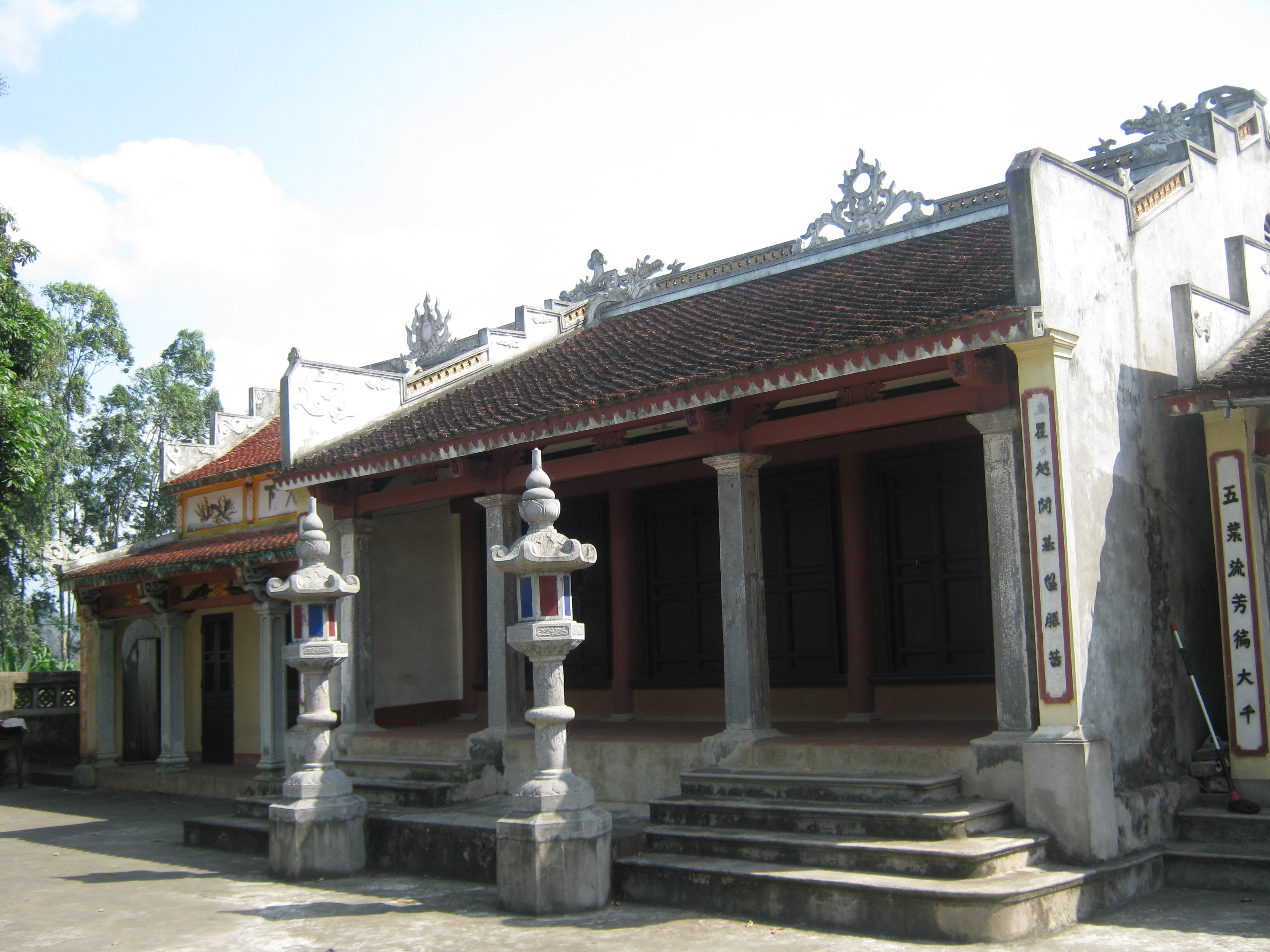
Overview & history
Bà Ngô Pagoda is an ancient pagoda belonging to the special national relic complex of the ancient capital Hoa Lư. The pagoda was built during the Đinh dynasty, right beside the right bank of the Hoàng Long River dyke and adjacent to the outer area of the former Hoa Lư citadel. Bà Ngô Pagoda was founded by Lady Ngô, empress of Đinh Tiên Hoàng and mother of one of the Twelve Warlords, Ngô Nhật Khánh.
Ancient Trường Châu Pagoda
During archaeological excavations at the Hoa Lư ancient capital area, archaeologists discovered a Han tomb next to Bà Ngô Pagoda by the Hoàng Long River. The excavation results proved that this ancient tomb dates back to the Han–Tang period. This forms the basis for the assertion that the Hoa Lư capital area must have been the seat of Trường Châu during the Tang dynasty, because according to Đào Duy Anh's book 'The Country of Vietnam through the Ages', the land of Ninh Bình during the Tang belonged to Trường Châu; whereas Thăng Long Hanoi was originally Đại La citadel built by Cao Biền, as recorded in historical documents.
The stone stele erected at Bà Ngô Pagoda, dated 1877 in the Nguyễn dynasty, contains the following passage:
"Bà Ngô Pagoda in our hamlet is a famous site of the former capital of Đại Việt. Once a scenic spot, but as the ages changed and the landscape transformed, the jade hermitage stands lonely under the setting sun, the precious pagoda desolate and solitary in the moonlight."
Legend has it that Bà Ngô Pagoda was the place where a Đinh dynasty empress (mother of the warlord and royal son-in-law Ngô Nhật Khánh) established and practised religious cultivation in her later years. In the pagoda, there is a large horizontal inscribed board from the Nguyễn era with the three characters "Bà Sa tự" (婆娑寺). According to the Sino-Vietnamese dictionary, 'Sa' (娑) means much suffering. Bà Ngô Pagoda in the 10th century was precisely the place where rituals of repentance were performed, to cleanse all worldly sins and karmic obstacles.
Lady Ngô
Bà Ngô Pagoda is associated with a historical figure, Lady Ngô, who was later made empress by King Đinh Tiên Hoàng. Lady Ngô was an aristocrat of the Ngô clan, named Hoàng Thị Thi. Her husband died early, so she helped her young son Ngô Nhật Khánh build his career in Đường Lâm—the homeland of the Ngô family. Ngô Nhật Khánh proclaimed himself An Vương and became one of the strongest leaders among the Twelve Warlords of the time. When Đinh Bộ Lĩnh subdued Ngô Nhật Khánh, he took Lady Ngô as his wife, gave his daughter Phất Kim in marriage to Nhật Khánh, and married Khánh's younger sister to his own son Đinh Liễn. Lady Ngô was a virtuous person; Đinh Bộ Lĩnh greatly respected her, never using her given name but always addressing her as Lady Ngô.
When Lady Ngô married Vạn Thắng Vương Đinh Bộ Lĩnh, although she was nearly 40 years old, she was the one who gave birth to Đinh Hạng Lang, the second son of the First Emperor. Đinh Tiên Hoàng, for her sake and also to win over Nhật Khánh, made Hạng Lang crown prince. According to official history, Đinh Liễn was very angry and had someone plot to kill Hạng Lang at the beginning of 979. However, out of love for his son and unwillingness to continue the bloodshed, the First Emperor did not punish Đinh Liễn with death. The fact that the First Emperor did not sentence Đinh Liễn to death made Nhật Khánh extremely angry, and this was the main motive that drove Khánh to defect to Champa.
When Nhật Khánh took his wife, Princess Phất Kim, and fled south, upon reaching the Nam Giới estuary, he drew his knife, slashed his wife's face, and scolded her:
"Your father deceived and oppressed my mother and me. How could I, for your sake, forget your father's crimes? I let you return; I will go elsewhere to find someone who can save me."
Previously, King Đinh had promised to put Khánh's younger brother (Hạng Lang) on the throne, but when Hạng Lang was killed, the perpetrator was not properly punished as Khánh wished, so Khánh sought out Champa to seek revenge. In October 979, Đinh Tiên Hoàng and his son Đinh Liễn were murdered. The remaining son, Đinh Toàn, ascended the throne, with Empress Dowager Dương Vân Nga acting as regent. Hearing of the First Emperor's death, Nhật Khánh persuaded the Champa king, Ba Mĩ Thuế, to send troops to attack Đại Cồ Việt. The Champa king took the opportunity to invade, personally leading over a thousand warships to attack Hoa Lư via the Đại Ác and Tiểu Khang estuaries. Upon entering the Đại Ác estuary (Thần Phù estuary), after one night, a storm arose, capsizing almost all the ships. Nhật Khánh and the Cham people drowned, with only the Champa king's ship surviving. Ba Mĩ Thuế gathered the remnants and retreated. Princess Phất Kim committed suicide in the Hoa Lư capital.
As for Lady Ngô, after the series of misfortunes that befell her husband and children, she, who had once been empress of Đinh Tiên Hoàng, left the royal palace and established a pagoda outside the Hoa Lư citadel to practise religion. This pagoda was named Đàm Lư, but the people commonly called it Bà Ngô Pagoda (now located in Hoàng Long hamlet, Trường Yên commune, Hoa Lư, Ninh Bình).
Legend has it that Lady Ngô was very compassionate, gentle, and lived to the age of 100. Perhaps for this reason, Bà Ngô Pagoda became one of the most famous longevity-seeking pagodas in Ninh Bình, where to this day, people come annually to pray for blessings, peace, and health for themselves and their loved ones.
Architecture
Bà Ngô Pagoda lies beside the Hoàng Long River dyke, with its gate facing the river, but the pagoda's buildings are aligned parallel to the dyke. The pagoda is located near the Trường Yên ferry landing and the Cắm Gươm Mountain relic, associated with the legend of the golden dragon carrying Đinh Bộ Lĩnh from Gia Viễn to Hoa Lư to establish his imperial career.
Among the ancient pagodas of the Hoa Lư ancient capital, Bà Ngô Pagoda stands independently, separated from residential areas. The pagoda's surroundings are quite peaceful, nestled under lush green foliage.
In the 'Hoa Lư Anthology', author Hoàng Quang Thuận wrote about Bà Ngô Pagoda as follows:
Bà Ngô stone pagoda from King Đinh's time
Taming Hoàng Long's waters, the sutra pillar was set
Octagonal, long-shaped, inscribed with Han script
Offering the pagoda Buddhist scriptures, still sacred.
Lonely old hermitage in the setting sun
The landscape changed, the distant caw of crows
Ngọc Am, precious pagoda, misty and cold
The guava tree before the pagoda has blossomed.
Photos
📷 Contribute photosVisiting tips
- Dress modestly; remove hats and keep quiet inside the main hall.
- Incense, flowers and offerings are usually sold right outside the gate; light an odd number of sticks (1 or 3).
- Most pagodas open from early morning to evening and are free to enter (some major sites charge a small scenic fee).
- Full-moon days, the 1st of the lunar month and Tet are very crowded; visit on weekday mornings for a quiet experience.
- Ask permission before photographing inside shrines; do not touch statues or altar objects.
Read more & references
Useful links to learn more before your visit:
References
- Vietnamese Wikipedia
- http://daitangkinhvietnam.org/lich-su-phat-giao/phat-giao-viet-nam/6872-phat-giao-thoi-dinh--tien-le-trong-cong-cuoc-dung-nuoc-va-giu-nuoc.html
- http://hanoi.vietnamplus.vn/Home/Nhung-net-tuong-dong-giua-Hoa-LuThang-Long-Ha-Noi/201212/8230.vnplus
- http://baoninhbinh.org.vn/chua-o-ninh-binh-20080424023500000p1c87.htm
- http://giacngo.vn/PrintView.aspx?Language=vi&ID=52F258
- http://kienthuc.net.vn/kho-tri-thuc/bi-an-chuyen-lap-hoang-hau-la-doi-cua-dinh-tien-hoang-612464.html
- http://www.dulichninhbinh.com.vn/travel-news/Chua-Ba-Ngo-Ngoi-chua-co-o-Co-do-Hoa-Lu.html
- https://web.archive.org/web/20110225003011/http://daitangkinhvietnam.org/lich-su-phat-giao/phat-giao-viet-nam/6872-phat-giao-thoi-dinh--tien-le-trong-cong-cuoc-dung-nuoc-va-giu-nuoc.html
- https://web.archive.org/web/20150429070707/http://hanoi.vietnamplus.vn/Home/Nhung-net-tuong-dong-giua-Hoa-LuThang-Long-Ha-Noi/201212/8230.vnplus
- https://web.archive.org/web/20180923162521/http://www.dulichninhbinh.com.vn/travel-news/Chua-Ba-Ngo-Ngoi-chua-co-o-Co-do-Hoa-Lu.html
- https://web.archive.org/web/20160304203914/http://giacngo.vn/PrintView.aspx?Language=vi&ID=52F258
Other pagodas in Ninh Bình
